|
COASTVAX
-
PROTOTYPE
ESTIMATES
Please use our
A-Z to
navigate this site or return HOME
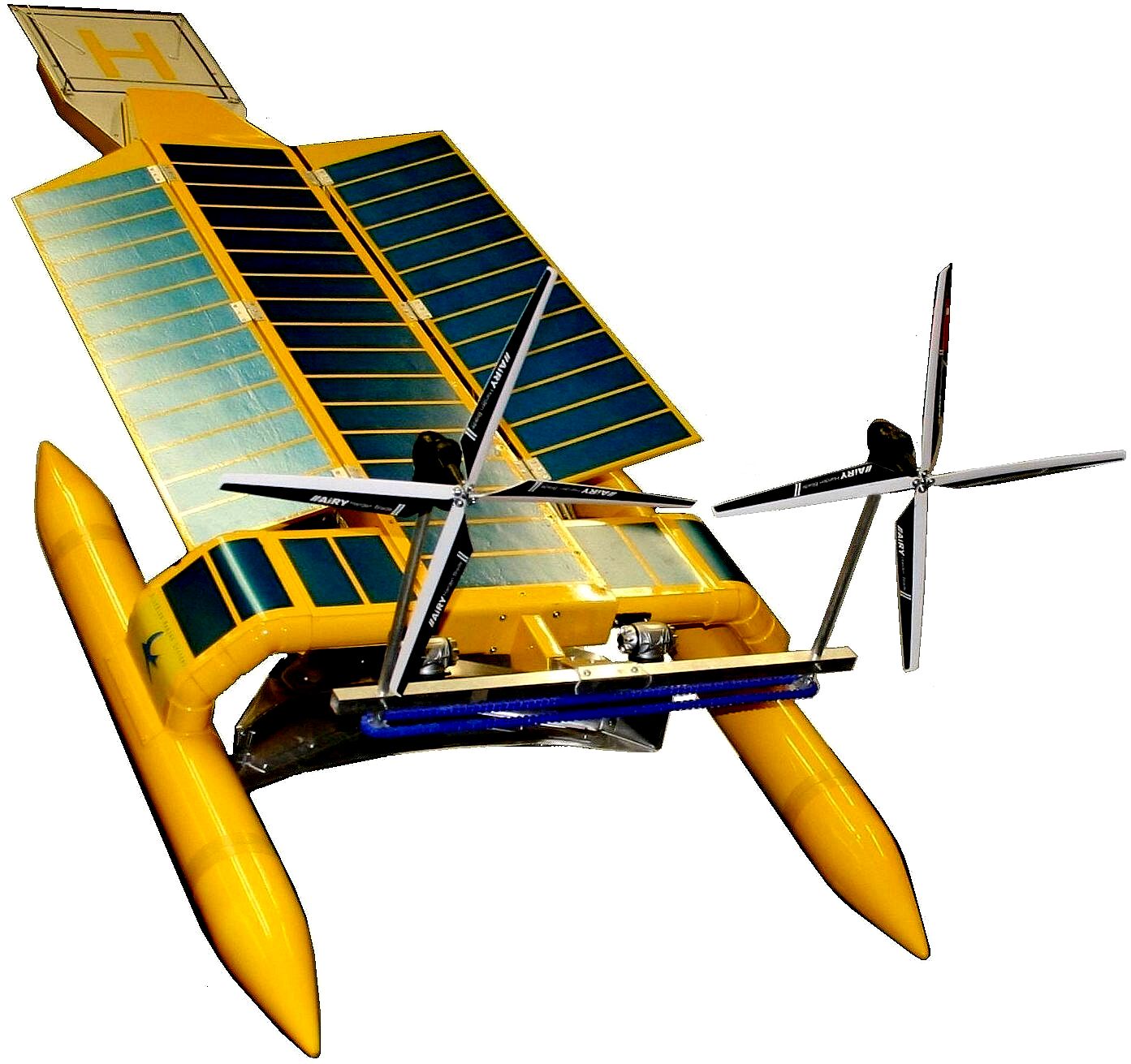
OCEAN
CONDITIONER - This
original SeaVax vessel
was designed to operate in fleets
to target ocean waste before it settles on the ocean floor
where nobody can recover it. There is nothing like it in
existence today, though other ideas for trapping plastic waste
are being developed, such as that of Boyan
Slat and the
Seabin.
SeaVax was to be made more cost effective in operational terms with AmphiMax
versatility that slashes the cost of production and servicing
by using a amphibious portable dock for assembly, launch and servicing.
SeaVax would have been the only ocean going machine capable of
harvesting ghost
fishing nets. Eleven years on from 2015, in 2026 there is
still nothing that can do that.
WHAT
IS COASTAL VAX?
Okay, so you have
what you think is a terrific idea. But will it work? And where
is the money coming from to test the theory?
Funding
is one of the biggest hurdles to overcome, with any project.
No dough, no go!
We
have tried a 2.2 meter (proof of concept) model in our test
tank. We know the idea works in controlled conditions, and we
know that a pioneering, solar powered lobster
fishing boat named Lorna
Jane, is operating in Scottish waters. Is fishing
for plastic litter so very much different?
There
are few funding mechanisms: Crowd Funding; Lottery Funding;
Innovate UK, and EU Horizon Funding. We have tried for Horizon funding
three times with no luck, and twice for Innovate funding. So maybe not the best use of our
energies trying those again.
We may be wrong, but have you seen
the forms to fill in? The negotiations with potential
consortium partners? Granted, we will have to negotiate prices
for components and materials with commercial suppliers, that
being far more of a certainty, with almost no wasted effort in
our past endeavors. We find the best deals, and the goods arrive.
No form filling, draining the life from productivity.
Crowd
funding has worked in-part, and we are very grateful for that
leg up, save that the conditions can be somewhat onerous time
wise; somewhat forcing the pace as a condition that worked
against us, trying to beat the clock. Lottery funding is well
worth a look at. But, before we even begin to consider any of
those, we are going to run through some cost scenarios.
Bear
in mind that a 10-14 meter coastal vax, or CoastVax, is not
capable of hauling or shredding ghost
fishing nets. That function is reserved for the thrice enlarged
SeaVax; where size matters.
We now
have a patent
in play, that may help us in the longer term, establishing us
as the world experts in intelligent mass seawater filtration
in theory, (assuming grant). Though, not giving us any real
world experience against wind and waves. The PlanetSolar
Turanor, the first solar powered ship to cruise the
oceans, being the benchmark at present.
So
how much will a 10-14 meter basic version of our idea cost to
build?
TOO
BIG: RIVERVAX
PILOT - This
prototype vessel could have leapt ahead of other designs to become a
reality in 2022 with appropriate levels of support for the
development consortium from the European Commission. We are
now thinking smaller and cheaper. To be able to experiment
with harvesting gear with a rig of some kind. No wind turbines
cuts the costs right away. And, using green hydrogen derived
fuels in coastal situations, is an option. The Lorna Jane
charges in dock.
We are looking to construct a
simple rig version of the SeaVax concept, a coastal vessel smaller
and more basic than Rivervax. We would like to size the vessel around 24 solar panels to generate 10.8 kilowatts of electricity. The vessel will be something like 14 meters in length and a trimaran in effect, with two sponsons made from
steel oil
drums (as the opening gambit), and a larger central collector or mouth that lowers into the sea when deployed, that is not hydrodynamic at all, because the mouth filters plastic from seawater.
We need to generate ballpark estimates of speed through the water, using a battery to store energy for low
power overnight operations, if required. Estimating the displacement if the remainder of the hull (box section spaceframe) is
aluminum, and the solar panels weigh 432 kilograms and the batteries 430kg. This is our design
brief, one foot on the starting grid.
1. Estimated Displacement Breakdown
With an aluminum box-section spaceframe, 24 solar panels, battery bank, and oil-drum sponsons, the total lightship and operational displacement is estimated at 2.8 to 3.5 metric tonnes (2,800 – 3,500 kg).
Component / Subsystem Estimated Mass Notes & Assumptions
•
Solar PV Array =432 kg Given (24 panels @ 18 kg each, 10.8 kW peak)
•
Battery Storage Bank = 430 kg Given (approx. 40–60 kWh usable depending on chemistry)
•
Aluminum Spaceframe = 750 kg (14m x 3–4m beam aluminum truss/box-section frame)
•
Sponsons (Oil Drums) 500 kg ~32 x 205L steel oil drums (~15 kg each + joining
structure)
•
Central Hull, Filter &
Drives = 650 kg
•
Scoop/mouth frame, conveyor belts, water pumps, electric thrusters
•
Lightship Weight (Dry) ~2,762 kg
•
Base hull and mechanical systems
•
Payload & Operations Margin+500 kg
•
Collected plastic payload, liquid ballast, safety gear
Total Operational Displacement ~3,262 kg (~3.3 tonnes Fully loaded operating condition)
COASTAL
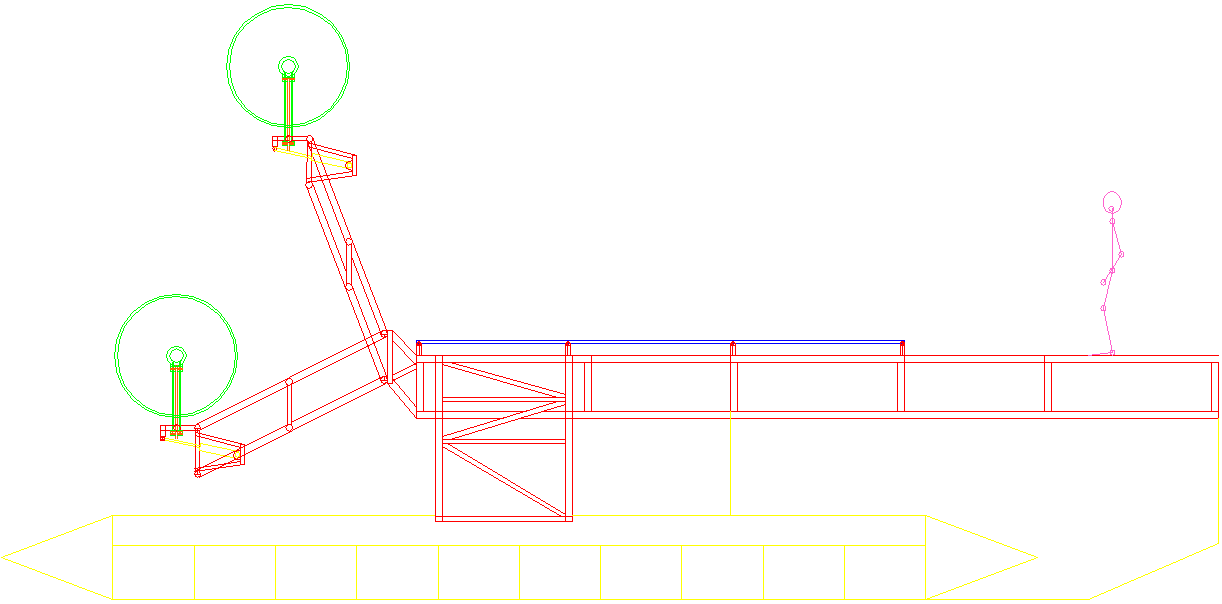
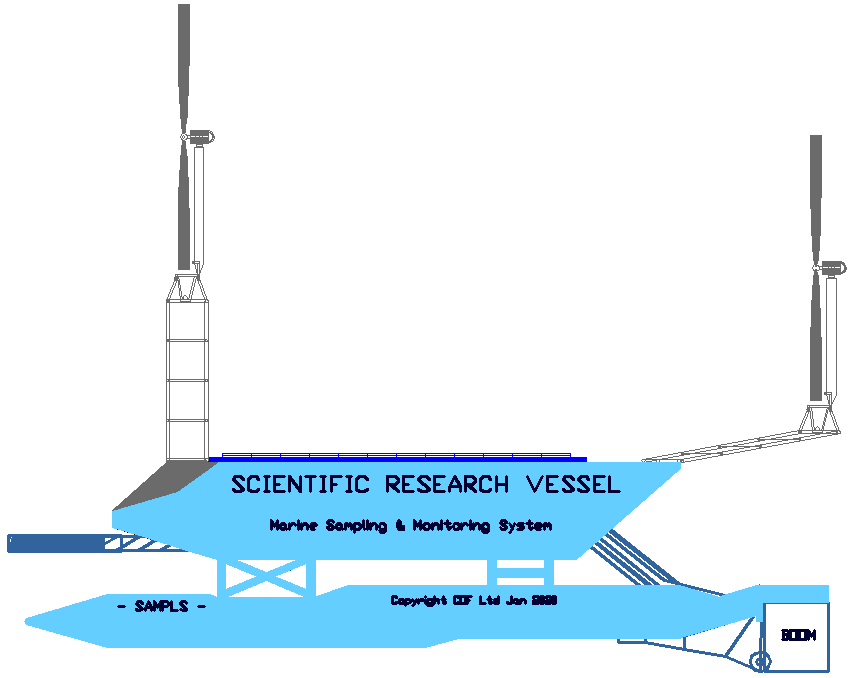
CLEANER SIDE VIEW V1 - This is a draft design for a
coastal/river experimental rig based on the SeaVax concept
from March 2019. Unlike
SeaVax, this low budget development boat was to be built of steel,
not aluminium,
to keep the up front costs down, though long-term use would
favour aluminium alloys.
As to economics, who might pay for the operations of such a
vessel locally remains to be answered. Unlike a dustcart that
collects household waste, there is no immediately obvious
health hazard from not cleaning or monitoring the oceans, rather it is out
of sight, toxic, cumulative and just as deadly. We are no
longer promoting wind power, the state having shown no
interest in that method of propulsion. It will need someone
with deeper pockets and more influence, to carry that
particular torch. The good news being, that the craft is far
less complicated design wise.
Sponson Buoyancy Check:
A 14-meter length fits approximately 16 standard 205-litre (55-gallon) drums per side (32 drums total).
Total Sponson Displacement Capacity: 32 x 205L = 6,560 Litres (~6.56 tonnes of buoyancy).
This provides a 2:1 buoyancy reserve ratio on the sponsons alone, ensuring high lateral stability even before accounting for the displacement of the main central hull.
2. Speed & Power Estimates Through the Water
Because the central hull features an open intake mouth and the oil-drum sponsons create surface ridge turbulence, the vessel will experience higher form drag than a standard sleek
catamaran or
trimaran.
Assuming an overall propulsive efficiency of 55% (typical for low-speed electric marine pods/thrusters):
Drag & Required Power Profile
Speed (knots) | Total Drag (N) | Propulsion Power
-----------------------------------------------------------
2.0 knots | 283 N
| 0.5 kW
3.0 knots | 636 N
| 1.8 kW
4.0 knots | 1,130 N
| 4.2 kW
5.0 knots | 1,770 N
| 8.3 kW
5.5 knots | 2,150 N
| 11.1 kW
SPEED REGIMES
Overnight Low-Speed Operation (1.0 to 1.8 kW Power Draw):
Speed: 2.5 to 3.0 knots (approx. 4.6 – 5.5 km/h).
Endurance: Drawing 1.5 kW overnight (e.g., 8 hours) consumes 12 kWh of energy, which is well within the capacity of a typical 430 kg lithium battery bank (~50–60 kWh capacity).
Daytime Operational Filtering Mode (5.0 kW to Thrusters, 5.8 kW to Filtration/Pumps/Auxiliaries):
Speed: 4.0 to 4.3 knots (approx. 7.4 – 8.0 km/h).
This is the optimal speed for skimming river/estuary trash without pushing excessive bow-wave water over the intake conveyor.
Maximum Speed (Full 10.8 kW Solar Direct to Propulsion): ~5.5 knots (approx. 10.2 km/h).
Beyond 5.5 knots, wave-making resistance from the blunt central intake and ribbed drum sponsons increases rapidly.
Key Design Considerations
Sponson Fairing: Adding simple conical nose cones and smooth PVC/canvas fairings or wraps over the oil drum ridges will reduce hull skin friction by 20–30%, adding roughly 0.5 to 0.8 knots to
our top speed at the same power input.
Intake Flow Control: Providing an adjustable baffle or hinged flap at the central intake mouth will allow you to close or stream the intake when transiting between collection sites, significantly lowering drag during transit.
The oil drum proposal is and was
a suggested starting point to reduce the build cost. If those sponsons are replaced with alloy cylinders and smooth welds, with a conical nose and taper tail, hull drag will reduce significantly. Leaving us to work on cost reduction relating to fabrication.
We are thinking to
(maybe) build this craft in-house, using our own welding equipment, from 5083 alloy. If the hull is around 3.3 tonnes, we think the cost of the aluminum will be containable, along with the solar panels and lithium battery, and thrusters. What
then is a ballpark figure for the cost of the components and materials, based on average prices from suppliers to the UK market?
Replacing the oil drum sponsons with smooth, tapered 5083 aluminium cylinders (with conical noses and hydrodynamically tapered tails) will yield a 25% to 35% reduction in overall hull drag. At equivalent power levels, this will increase our cruising speed by roughly 0.7 to 1.2 knots and substantially improve fuel/power efficiency.
Because we would be building and welding in-house, in this
example, we'd eliminate commercial shipyard labour rates (£60–£90/hr), bringing total expenditure down strictly to raw materials, equipment, and key propulsion hardware.
The table below outlines ballpark component and materials budget based on direct UK trade and commercial supplier prices.
Estimated In-House Build & Hardware Budget (UK Market Prices)
All figures are estimates ex-VAT unless noted, assuming trade/commercial purchasing in the UK.
Procurement & Fabrication Highlights
1. Aluminium Sheet (5083-O / H111):
When purchasing 5083 marine-grade sheet, buying in standard $2,500\text{mm} \times 1,250\text{mm}$ or $3,000\text{mm} \times 1,500\text{mm}$ full mill sheets directly from major UK stockists (such as Aluminium Warehouse, Righton Blackburns, or Aalco) drops the cost per kilo down towards the lower end of the £4.00/kg range.
2. Rolling the Cylinders:
Forming smooth cylinders out of 3mm or 4mm 5083 sheet in-house requires access to a 2m or 3m three-roll initial pinch plate roll. If rolling in-house is not feasible, ordering pre-rolled tube sections or having a local steel fabricator roll the skin sheets usually adds only a modest sub-contract fee (£400–£800 total).
3. Solar Panel Sourcing:
Tier-1 solar panels (like JA Solar or LONGi N-type bifacial panels) sit at historically low commercial price levels in the UK (£0.13 to £0.16 per watt ex-VAT). Buying a full pallet of 24 to 30 panels gets wholesale pricing.
4. LiFePO4 Cells vs. Modular Packs:
Building your own 48V pack using raw 3.2V 280Ah/314Ah Prismatic LiFePO4 cells with a quality smart BMS reduces battery costs to around £70–£90 per kWh, whereas pre-packaged drop-in marine modules sit nearer to £110–£140 per kWh.
DESIGN
DRAFT
-
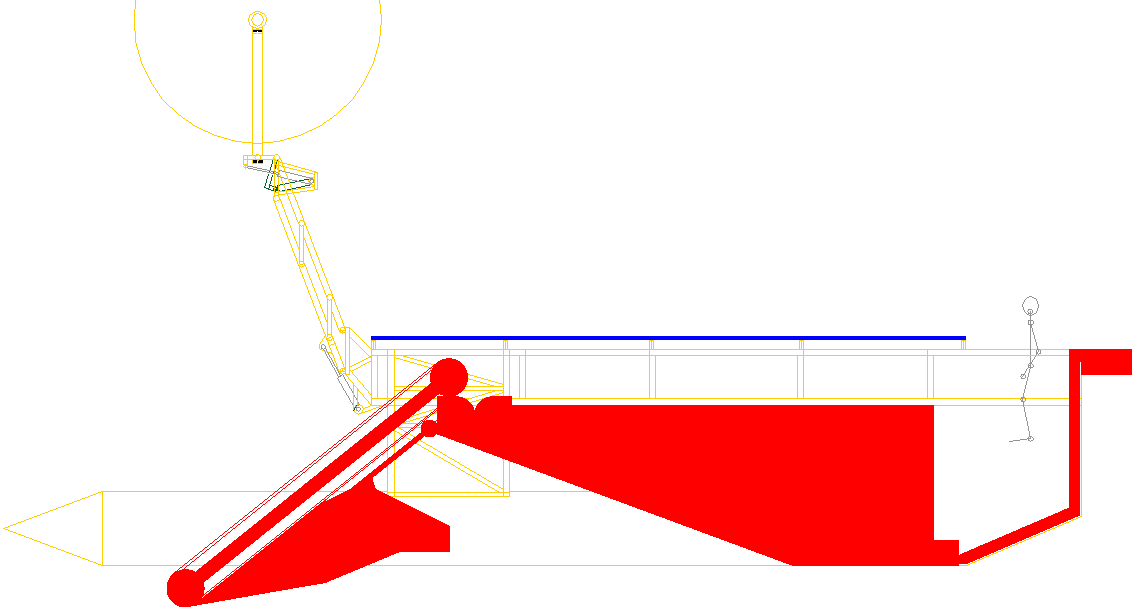
The filtration module, cargo hold and offloading mechanism is
shown in red in outline form in the above diagram. The system
consists of several integrated components, incorporating
motors, pumps, hydraulics, electronics and computer programs -
all to be powered by energy from nature - to avoid creating greenhouse gas emissions. You can see from the level of
integration that such a system would not lend itself to a
bolt-on item for existing vessels. The vessel has to be custom
designed and built.
DRAFT
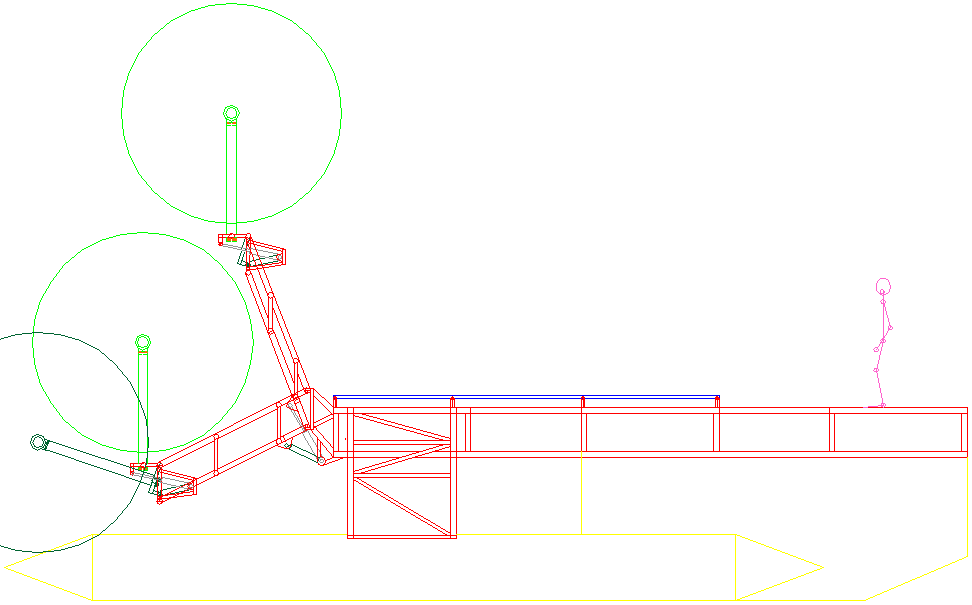
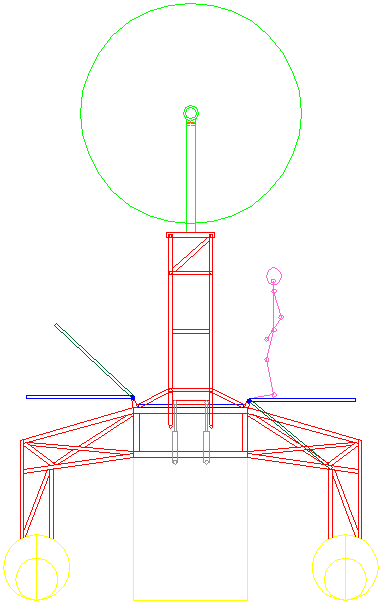
COASTAL DESIGN - These diagrams show a single 1.5kW
wind turbine mast, an experiment that was planned for 2020
funding dependent - that never materialised. This version uses 36 solar panels to give
6.9kW (9.25hp) per hour energy harvesting in sunlight. It is
worth noting that a small craft like this offers only one
eighth the efficiency of the full size SeaVax machines.
REVISED PROJECT BUDGET (SELF BUILD) INCLUDING 1/4 SCALE
AMPHIMAX
1. CoastVax Craft 14m 5083 Aluminium Hull & Hardware
• 5083 plate & 6082 extrusions for central hull & tapered cylinder sponsons
• 10.8 kW solar PV array + 40 kWh LiFePO4 battery bank + MPPT controllers
• Dual 6kW electric pod thrusters + controls & wiring
• Plastic intake conveyor & mechanics
£23,500
2. 1/4-Scale AmphiMax Steel Spaceframe Launch / Recovery Vehicle
• Structural steel box section & heavy plate frame
• 4x rubber-tracked caterpillar bogie assemblies (mini-excavator style undercarriage units)
• Flowfit hydraulics: 2x track motors, proportional directional control
valves
•
Hydraulic pump, reservoir, high-pressure hoses & fittings
• Reconditioned second-hand diesel engine (power pack drive)
• Hydraulic recovery winch & tilt mechanism
£11,200
3. Mobile Site Support Onsite Power & Transport
• LWB Ford Transit Support Van: Used (Euro 6, strong chassis/runner for equipment hauling)
• Mobile Welding Generator Rig: 15–20 kVA diesel generator
(provides clean 3-phase/single-phase power for pulse-MIG/TIG aluminium welding on location)
£12,000
4. Permits & Admin Crowdfunding & Operational Overheads (~12%)
• Platform fees (Kickstarter/Indiegogo + processing)
• Eastbourne beach access, EA/local authority launch permits & insurance
£5,600
Subtotal Direct Hardware, Equipment & Operations Base
£52,3005.
Contingency Buffer40% Unforeseen Costs Buffer
• Covers material price fluctuations, steel/aluminium scrap allowance, hydraulic tweaks, and site logistics contingency
£20,900
TOTAL CAMPAIGN TARGET Complete Mobile Build, Launch System & RiverVax Vessel
(self-build)
£73,200
Key Technical & Fabrication Notes
1. AmphiMax Hydraulic Drive Circuit:
• Powering the 1/4-scale AmphiMax track bogies via Flowfit hydraulics is straightforward using an engine-driven tandem gear pump (or variable displacement piston pump).
• Utilizing dual orbit hydraulic motors with integrated overcenter brake valves on each track pair gives independent skid-steering, enabling the vehicle to pivot directly on shingle beaches at Eastbourne.
2. Onsite Aluminium Welding Rig:
• Aluminium MIG welding (especially 5083 plate outdoors) requires clean voltage stability and high amperage. A 15–20 kVA towable diesel generator ensures high duty cycles for high-amperage MIG spool-gun welding without tripping thermal cuts. A portable wind-break shelter on the beach will also be necessary to preserve Argon gas coverage while welding outdoors.
3. Asset Value Post-Launch:
• The LWB Transit van, welding generator, and 1/4-scale AmphiMax launch rig retain their utility beyond the initial RiverVax assembly. They form a permanent, mobile launch-and-recovery kit for future vessels or maintenance ops.
The last thing we need is crane hire. To be able to lift the component hull parts, onto and into position on the baby Amphimax. We will also need water filtration equipment as part of the RiverVax, and
navigation equipment, sonar, radar and autopilot. This will not give us an
AI SeaVax type vessel, but a prototype to test out the concept, for when calls come up that may allow us to attract partners for Horizon Europe,
and Mission Ocean & Waters, EU calls. We will not have the
resources to lead any Horizon bid. We might only support
another lead bidder. One call where we were the lead, cost us
something like £20,000 pounds, that we did not have to burn.
Positioning the CoastVax as an operational hardware demonstrator creates the perfect tangible baseline for Horizon Europe work packages (such as Horizon Europe Cluster 6: Circular Economy and Bioeconomy or Mission Ocean & Waters).
CRANE
HIRE & NAVIGATION INSTRUMENTS
Adding a mobile crane hire block for beach assembly, a commercial navigation & auto-steering suite (radar/sonar/autopilot), and
our £15,000 experimental filtration R&D budget reshapes the project into a fully instrumented research testbed.
Below is the adjusted budget with these additions and the updated 40% contingency buffer.
Updated Master Project Budget & Horizon Europe Prototype Target
All prices estimated UK commercial/trade figures ex-VAT.
Category
Component / Hardware Breakdown Estimated Cost
1. RiverVax Hull & Drive
14m 5083 Aluminium Hull & Solar Power System
• 5083 plate & 6082 extrusions for central hull & tapered cylinder sponsons
• 10.8 kW solar PV array + 40 kWh LiFePO4 battery bank + MPPT controllers
• Dual 6kW electric pod thrusters + controls & wiring
£22,000
2. Filtration R&D Suite
Experimental Water & Plastic Filtration Mechanics
• Dedicated water filtration, microplastic skimmers, intake conveyor mechanics, macerator/shredder pumps, and test sampling sensors
£15,000
3. Navigation Electronics Integrated Bridge & Sensor Suite
• 10"/12" MFD Chartplotter (Garmin/Raymarine)
• Compact Radome Marine Radar (closed dome for target/obstacle tracking)
• CHIRP SideVü & DownVü Sonar (bathymetry & subsurface debris scan)
• Hydraulic Autopilot Corepack & Heading Sensor (course keeping)
£4,500
4. 1/4-Scale AmphiMax Steel Spaceframe Launch / Recovery Vehicle
• Structural steel box frame + 4x tracked caterpillar bogies
• Flowfit hydraulics: track motors, proportional valves, pump, tank, hoses
• Donor diesel engine power pack + hydraulic recovery winch
£11,200
5. Support & Assembly Mobile Transport & Beach Assembly Infrastructure
• LWB Ford Transit Support Van (used Euro 6 runner)
• 15–20 kVA mobile diesel welding generator rig
• Contract Mobile Crane Hire: (~3–4 days site visits for placing central hull and heavy sponson modules onto AmphiMax at Eastbourne beach)
£14,500
6. Overheads & Permits Crowdfunding & Operational Admin (~12%)
• Platform fees (Kickstarter/Indiegogo + Stripe processing)
• Eastbourne beach access, Environment Agency/Port Authority launch permits, site insurance
£8,000
Subtotal Direct Prototype Hardware, Electronics & Operations
£75,200
7. Contingency Buffer 40% Unforeseen Costs Buffer
• Covers material price swings, custom hydraulic fittings, extra crane time, and prototype adjustments
£30,080
TOTAL CAMPAIGN TARGET
Complete Mobile Build, Research Testbed & Launch System = £105,280
EU Water Mission Call / Horizon Europe Positioning Advantages
• TRL 5/6 Readiness: Having an actual 14m vessel with real-time sonar/radar logging and a dedicated £15,000 filtration test setup
would shift our rating from a concept (TRL 3) to a validated prototype in a relevant environment (TRL 5–6).
• Data-Gathering Platform: The radar and side-scan sonar suite won't just keep the craft safe; it can log floating debris fields and seabed profiles, generating the empirical datasets required for EU research partners.
• Modularity: Designing the £15,000 filtration rig as a modular payload bay allows future Horizon partners to slot in their own microplastic filters, sensor arrays, or bio-reactors without altering the core vessel drive or
AmphiMax launch rig.
VOLUNTEER
AGE CONTINGENCY
As
a not-for-profit organization, the Cleaner
Ocean Foundation has another potential problem. One of our key volunteers in over 70 years old. He is still keen, but he is the only person qualified and skilled enough to weld alloy, design and fit drive machinery, etc. Raising the money for such projects is not plain sailing at the best of times. We think it wise to have a skilled labour quotient, just in case of illness, or infirmity. We would like to build in professional hull fabrication costs at a shipyard, and professional boat fitting-out services, all at reasonable industry rates. A good cost comparison exercise in any event.
Transitioning from an in-house volunteer effort to commercial marine shipyard contracting provides vital risk mitigation. In the UK, commercial boatbuilding yards and specialist marine fabricators typically charge trade labour rates between £55 and £75 per hour (ex-VAT) for coded aluminium TIG/MIG welders, marine electricians, and shipwrights.
Building in professional labour ensures the project remains fully viable regardless of individual volunteer availability. It also satisfies institutional funders, grant bodies, and UKCA/RCD surveyors who often require certified coded welders for structural hull compliance.
Below is the comparative breakdown integrating professional commercial yard fabrication and system fit-out services.
Professional Yard Build vs. Self-Build Cost Comparison
All commercial estimates are based on UK marine industry benchmarks (£62.50/hr average yard rate).
.....

Key Takeaways for Grant Applications & Crowdfunding
1. Dual-Tier Funding Strategy:
Tier A (£105,000 Target): Framed as a Community & Volunteer Tech Demonstrator built in-house with volunteer expertise, using the mobile support rig and Eastbourne beach launch site.
Tier B (£260,000 Target / Horizon Europe Match-Funding): Framed as a Fully Commercial Prototype Build outsourced to a certified UK boatyard (such as facilities along the South Coast in Solent, Poole, or Shoreham).
2. Compliance & Surveyor Advantages:
Having a commercial yard handle the 5083 aluminium welding automatically generates coded welder certificates (BS EN ISO 9606-2) and material traceability logs (EN 10204 3.1). This speeds up MCA Workboat Code or RCD Category C certification, which is particularly beneficial when presenting the craft for Horizon Europe consortium calls.
3. Hybrid Operational Model:
You can also present a hybrid approach: contract out only the critical structural aluminium hull welding to a specialist fabrication shop (~£65k) while keeping the machinery fit-out, solar mounting, and filtration gear in-house (~£0 labour), bringing the pre-contingency budget to around £140,000.

If we are going for MCA workboat certification. We may want to include professional naval architect design fees.
Engaging a registered Naval Architect is important for obtaining MCA Workboat Code (Workboat Code Edition 3 / MGN 280) approval, particularly for an unusual non-standard geometry like a 14-meter trimaran with an open-mouth intake hull.
A Naval Architect provides the validated engineering package that Certifying Authorities (such as MECAL, YDSA, or IIMS) require before issuing a Workboat Certificate.
Scope of Professional Naval Architecture Services
For a novel vessel like CoastVax, naval architecture fees cover:
1. Lines Drawing & 3D CAD Hydrodynamics: Hull lines, hydrostatic modeling, wetted surface area, and CFD drag verification for the central open-mouth hull and tapered sponsons.
2. Structural Fire & Strength Calculations: Structural scantling calculations to ISO 12215 / Workboat Code Edition 3 standards for 5083-H111 aluminium plate and 6082-T6 extrusions.
3. Stability Information Book (SIB): Inclining experiment supervision, intact stability curves, and damage stability modeling (crucial for trimarans with open intake bays).
4. General Arrangement (GA) & Safety Plan: Electrical schematic review for high-voltage DC (lithium/solar bus) and machinery integration.
Estimated Naval Architecture & Coding Fees (UK Market)
Concept & Lines Modeling
3D hull geometry, hydrostatics, displacement & center of gravity (CG) baseline
£3,500 – £5,000
Structural Scantling
Review
ISO 12215 structural calculations & plate/framing thickness verification
£2,500 – £4,000
Stability Booklet (SIB)
Intact and damaged stability modeling + inclining test sign-off
£3,000 – £4,500
Certifying Authority Fees
MCA Certifying Authority (MECAL/YDSA) coding survey, plan approvals & SIB endorsement
£1,500 – £2,500
Total Professional Design & Coding
Complete Naval Architecture & MCA Compliance Package
£10,500 – £16,000
Updated Master Budget Comparison (Including Naval Architect)
Adding a median £13,000 Naval Architecture & Survey Fee updates the total campaign targets across both models:
....

....

....

.....
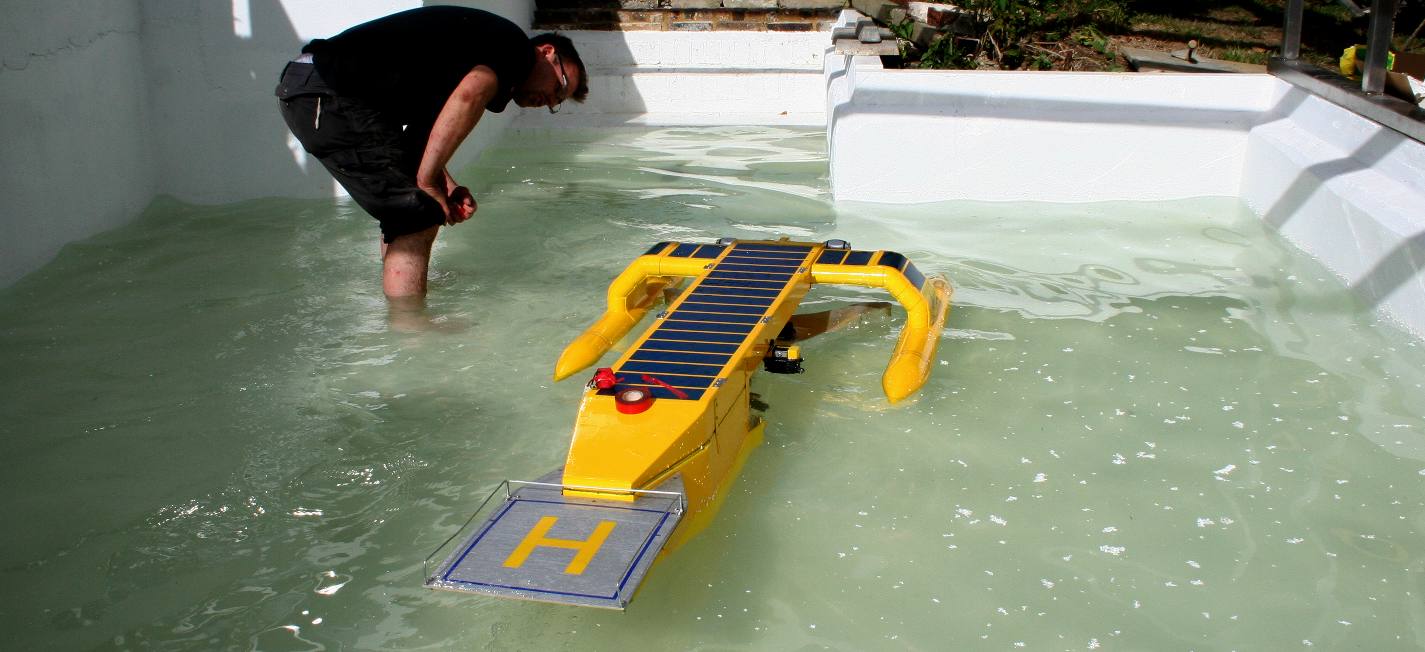
TESTING
- Chris Close (Project
Director 2015-2017) is seen here watching the
SeaVax proof of concept boat filter plastic particles from
water in our
test tank facilities, in this case small polystyrene pieces
were scattered on the surface and recovered using twin
hydrocyclonic chambers to trap the plastic, while clean water
was returned to the tank. Simple, and it worked. We designed
and built the craft in house.
THE
UNITED NATIONS UNEP - Could
SeaVax be a part solution for UN goals?
CAPEX
AND OPEX - What
level of G20 investment is required?
GHOST
FISHING GEAR
- Drowning fish,
mammals and reptiles, and animal poisoning
HEALTHIER
OCEANS & BLUE GROWTH - What
are the health benefits?
INVESTABILITY
- Can
SeaVax 2.0 AI be a commercial success?
WHERE
DOES AI COME IN? - Will
artificial intelligence make a difference?
WHAT
IS THE MARKET VALUE OF OCEAN PLASTIC? - Is it worth fishing for marine
plastic?
CERTIFICATION
- How will the ocean plastic be verified for credits?
WORLD
BANK, IMF & UNEP - Are
there any match funding opportunities?
CIRCULAR
(PLASTIC) ECONOMY - FISHING GROUNDS
PATENT
APPLICATION - GB2622325.5
23rd September 2026
PATENT
ABSTRACT
- DESCRIPTION
- CLAIMS
- ACCELERATION
SARGASSUM
CHAIN - The 5,500 mile bloom, 33 million ton
Atlantic
belt?
SARGASSUM
$VALUE - Where is the dollar value in recovered treated brown sea
weed?
THE
CARIBBEAN -
Gulf of Mexico, Cancún, Tulum - Barbados,
Saint
Lucia, Martinique,
Guadeloupe,
Dominican Republic & Puerto Rico
COASTVAX
(CVAX) - Ballpark budget 10-14 meter coastal
prototype - self build concept
CVAX
SHIPYARD - Commercial construction estimates 5083 and
6082 alloys
CVAX
SOLAR POWER - Wing panels stressing and hydraulic
gearbox calculations for 30 knot winds
CVAX
UK - Blue channels for coastal operations: Bristol, Lyme
Bay, Celtic Sea, Dover Straits, Irish Sea
CVAX
MEDITERRANEAN - Blue channels (Libya, Egypt, Cyprus, Aegian, Adriatic, Alboran, Balearic, seas
CVAX
GULF OF MEXICO - Yucatan Channel, Campeche Bay, Florida
Straits, Texas Islands
CVAX
CARIBBEAN - Colombia, Costa Rica, Belize, Haiti,
Honduras, Jamaica,
Nicaragua, Panama, Venezuela
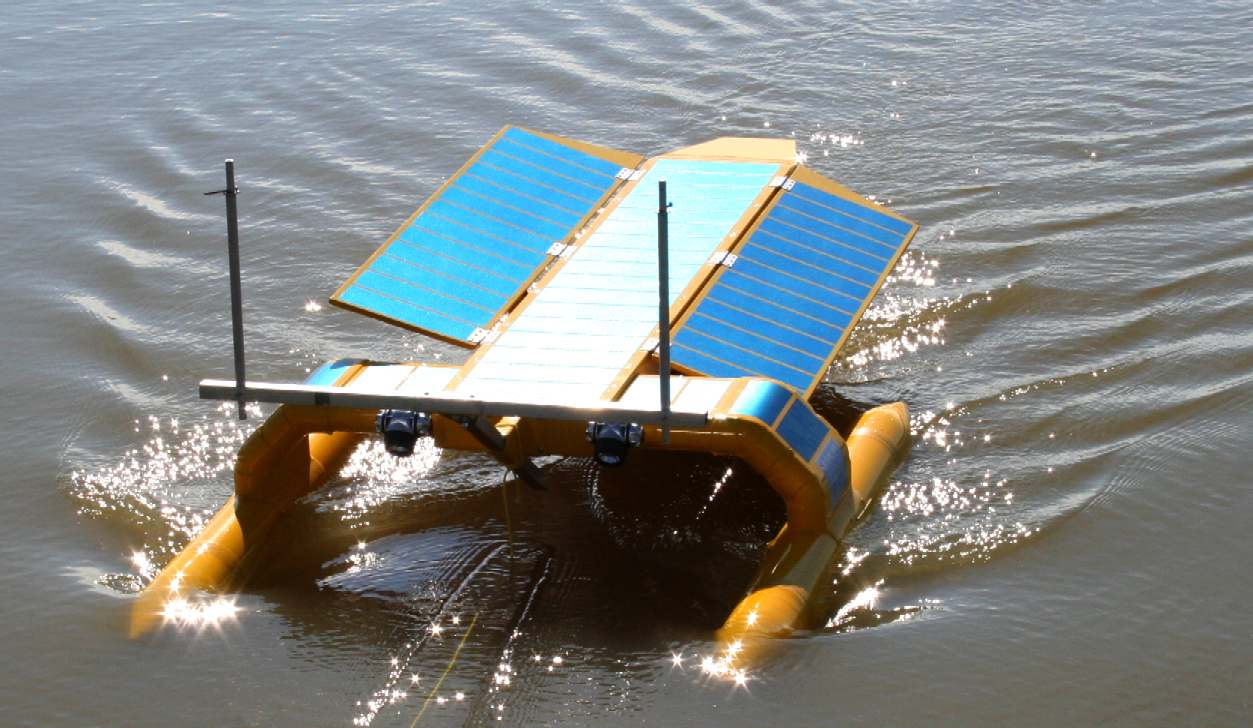
OPEN
WATER -
SeaVax is seen here during open water floatation
trials. Please note that this is a small (proof of concept)
version of any ocean or river floating dustcart that we hope
will be tested on the south coast of England as the project
progresses. SeaVax is a selective filtration machine that can
be configured to target solid plastics and particles. The
machine could also be used in oil spill emergencies, or as a
selective fishing vessel. The platform could thus be useful in
many ways.
There
are 5 swirling ocean garbage patches, filled with marine
litter/plastic, called gyres.
That said, we will not be looking any further than UK and
Mediterranean littoral coastlines and rivers with any CoastVax test rig -
if we get that far. As we say, the idea is the easy part.
Funding, is another matter. That is in the hands of the gods
and the will of the people.
LINKS
& REFERENCE
https://www.
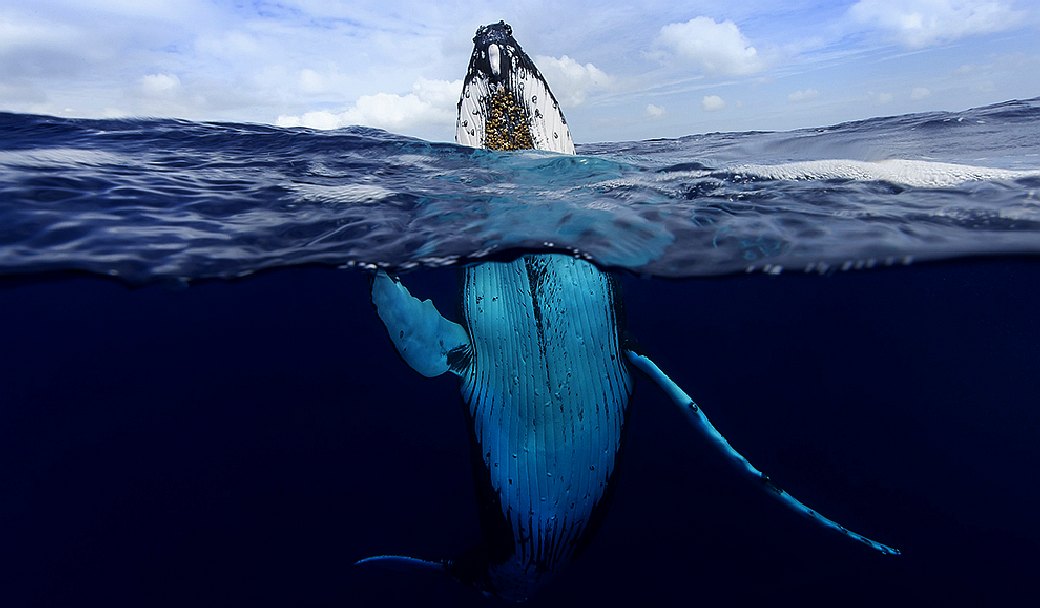
MARINE
LIFE - This humpback whale is one example of a magnificent
animal that is at the mercy of human
activity. Humans are for the most part unaware of the harm their fast-lane
lifestyles are causing. We aim to change that by doing all we
can to promote ocean literacy.
|