|
SV2AISG -
SARGASSUM: CARIBBEAN & GULF OF MEXICO
Please use our
A-Z to
navigate this site or return HOME
OCEAN
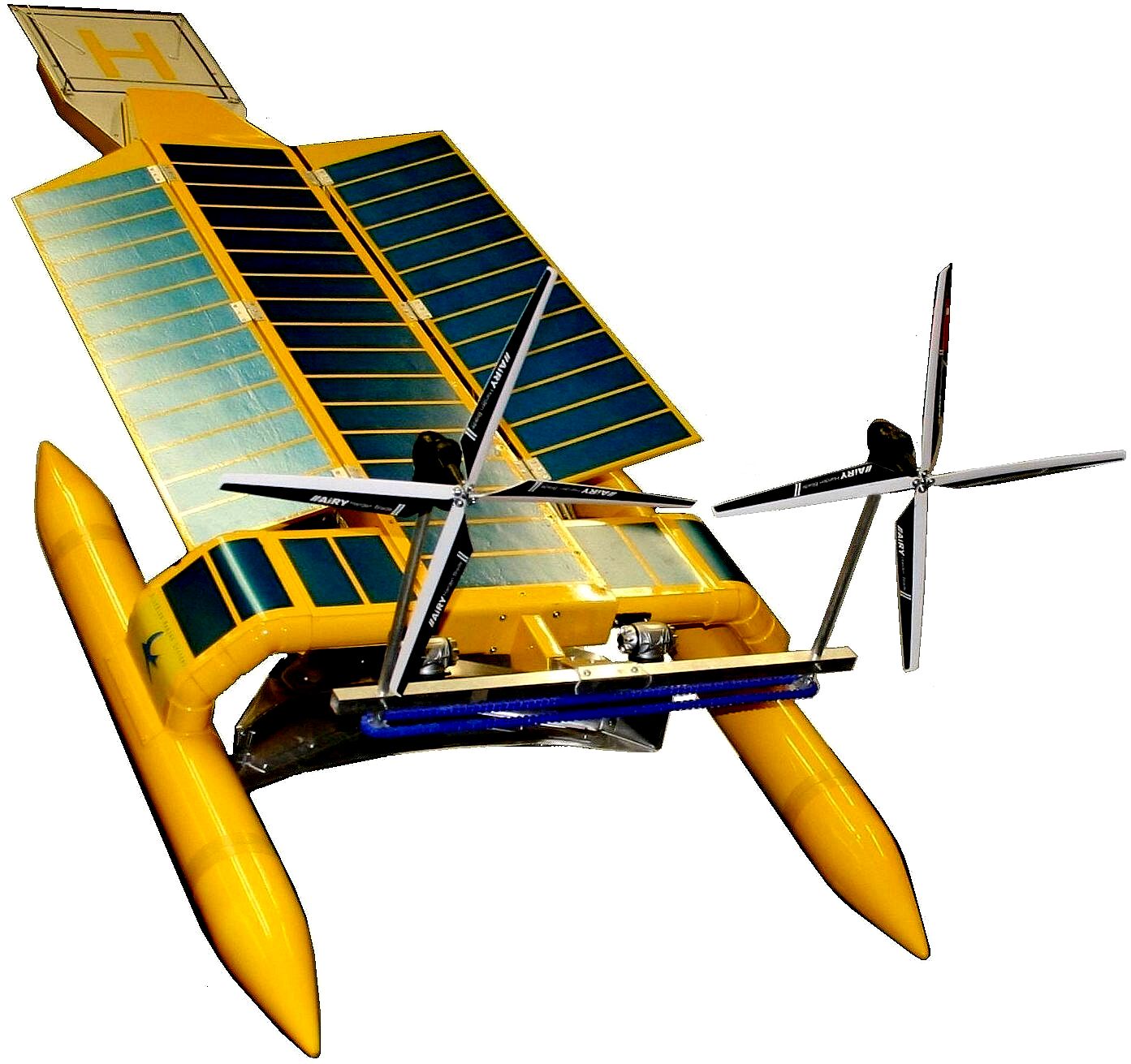
CONDITIONER - This
original SeaVax vessel
was designed to operate in fleets
to target ocean waste before it settles on the ocean floor
where nobody can recover it. There is nothing like it in
existence today, though other ideas for trapping plastic waste
are being developed, such as that of Boyan
Slat and the
Seabin.
SeaVax was to be made more cost effective in operational terms with AmphiMax
versatility that slashes the cost of production and servicing
by using a amphibious portable dock for assembly, launch and servicing.
SeaVax would have been the only ocean going machine capable of
harvesting ghost
fishing nets. Eleven years on from 2015, in 2026 there is
still nothing that can do that.
Deploying SeaVax 2AI (SV2AISG) in an Inshore Barrier Interception Strategy offers a targeted approach to protect tourism economies in the Caribbean and the Gulf of Mexico.
In regions like the Mexican Riviera Maya, the Dominican Republic, and Barbados, local authorities and naval forces (including the
Mexican
Navy, which deployed sargassum-harvesting vessels and naval barriers) struggle with reactive measures. Land-based beach rakes and manual labor remove heavy volumes of sand, driving coastal erosion, while rotting seaweed releases toxic hydrogen sulfide gas (H2S) that damages hotel infrastructure and disrupts tourism.
1. Scale of the Caribbean Challenge
During peak summer influxes, the Caribbean Sea holds tens of millions of tons of floating
Sargassum.
Beach Inundation Scale: Major hotspot zones along the Mexican Caribbean alone receive between 300,000 to 500,000 tons of landing biomass per
season.
The Inshore Harvest Target: To protect high-value resort beaches across the Caribbean arc, an estimated 1.5 million to 2 million tons of incoming Sargassum must be intercepted in-water (within 0.5 to 3 miles off shore) before it touches the surf zone.
2. Inshore Protection Plan: Fleet Sizing
Assuming an operational window during the primary 180-day Caribbean peak season (April to September) and a per-vessel capacity of 100 tons per day:
- Per Vessel Season Output: 100\tons/day x 180 days = 18,000 tons per season.
- Fleet Requirement for 1.8 Million Tons:

Fleet Size = 1,800,000/18,000 tons/vessel = 100 SV2AISG Units
Regional Distribution Pattern (100 Units)
[ Deep-Water Nearshore Corridor (0.5 – 3 Miles Off Beach) ]
│
┌───────────────────────┼───────────────────────┐
▼ ▼ ▼
Mexican Riviera Maya Lesser Antilles Arc Dominican Republic & Puerto Rico
(35 Units) (40 Units) (25 Units)
A. Mexican Riviera Maya (Cancún to Tulum): 35 units positioned along coastal currents to defend major resort stretches.
B. Lesser Antilles Arc (Barbados, Saint Lucia, Martinique, Guadeloupe): 40 units deployed at eastern barrier entry channels where transatlantic drift mats enter the Caribbean basin.
C. Dominican Republic & Puerto Rico: 25 units safeguarding southern and eastern resort bays.
3. Operational Advantages over Conventional Naval / Beach Cleaning

4. The Economic Logic for Resort Authorities
By capturing Sargassum before it enters the surf zone:
Cost Offsetting: Local hotel associations and municipal governments currently spend millions annually on beach raking and diesel land transport. Redirecting these funds into automated offshore collection contracts creates a predictable, lower-cost protection barrier.
Feedstock Value Creation: Inshore-harvested Sargassum is free of beach sand and organic rot, maximizing its value for onshore biorefining into bio-fertilizers, bioplastics, and pharmaceutical compounds.
RIVERVAX
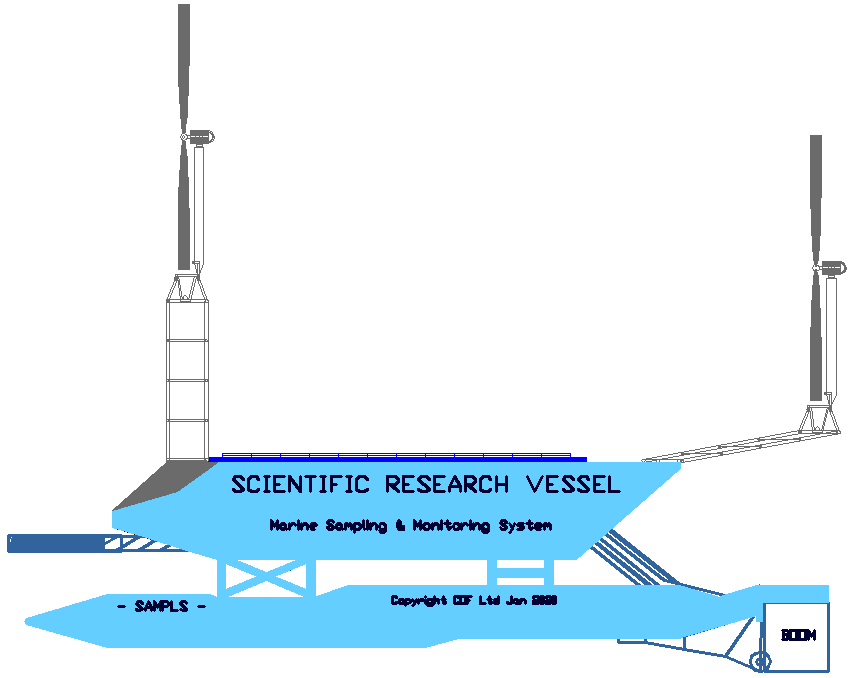
PILOT - This
prototype vessel could have leapt ahead of other designs to become a
reality in 2022 with appropriate levels of support for the
development consortium from the European Commission. Forward
Sea and RiverVax models will not feature wind turbines.
Following a study concluded in 2022, by a Belgian masters
degree student. Thank you L : )
WHAT
IS SEAVAX 2.0 AI? - A high-yield
recovery system providing environmental remediation.
THE
UNITED NATIONS ENVIRONMENT PROGRAMME - Could
SeaVax be a part solution for UN goals?
CAPEX
AND OPEX - What
level of G20 investment is required?
CERTIFICATION
- How will the ocean plastic be verified for credits?
GHOST
FISHING GEAR - Drowning
fish, mammals and reptiles, and animal poisoning
HEALTHIER
OCEANS & BLUE GROWTH - What
are the health benefits?
INVESTABILITY
- Can
SeaVax 2.0 AI be a commercial success?
OIL
SPILLS - Can crude from major ocean spills, become
a recoverable resource?
WHERE
DOES AI COME IN? - Will
artificial intelligence make a difference?
WHAT
IS THE MARKET VALUE OF OCEAN PLASTIC? - Is it worth fishing for marine
plastic?
WORLD
BANK, IMF & UNEP - Are
there any match funding opportunities?
PATENT
APPLICATION - GB2622325.5
23rd September 2026
PATENT
ABSTRACT
- DESCRIPTION
- CLAIMS
- ACCELERATION
SARGASSUM
CHAIN - The 5,500 mile bloom, 33 million ton
Atlantic
belt?
SARGASSUM
$VALUE - Where is the dollar value in recovered treated brown sea
weed?
THE
CARIBBEAN -
Gulf of Mexico, Cancún, Tulum - Barbados,
Saint
Lucia, Martinique,
Guadeloupe,
Dominican Republic & Puerto Rico
COASTVAX
(CVAX) - Ballpark budget 10-14 meter coastal
prototype - self build concept
CVAX
SHIPYARD - Commercial construction estimates 5083 and
6082 alloys
CVAX
SOLAR POWER - Wing panels stressing and hydraulic
gearbox calculations for 30 knot winds
CVAX
UK - Blue channels for coastal operations: Bristol, Lyme
Bay, Celtic Sea, Dover Straits, Irish Sea
CVAX
MEDITERRANEAN - Blue channels (Libya, Egypt, Cyprus, Aegian, Adriatic,
Alboran, Balearic, seas
CVAX
GULF OF MEXICO - Yucatan Channel, Campeche Bay, Florida
Straits, Texas Islands
CVAX
CARIBBEAN - Colombia, Costa Rica, Belize, Haiti,
Honduras, Jamaica,
Nicaragua, Panama, Venezuela
CIRCULAR
(PLASTIC) ECONOMY - FISHING GROUNDS
There
are 5 swirling ocean garbage patches called gyres:
1.
North
Atlantic Gyre
2.
South
Atlantic Gyre
3.
Indian
Ocean Gyre
4.
North
Pacific Gyre
5.
South
Pacific Gyre
The
ocean is a vast expanse of salt water: a shared asset.
TESTING
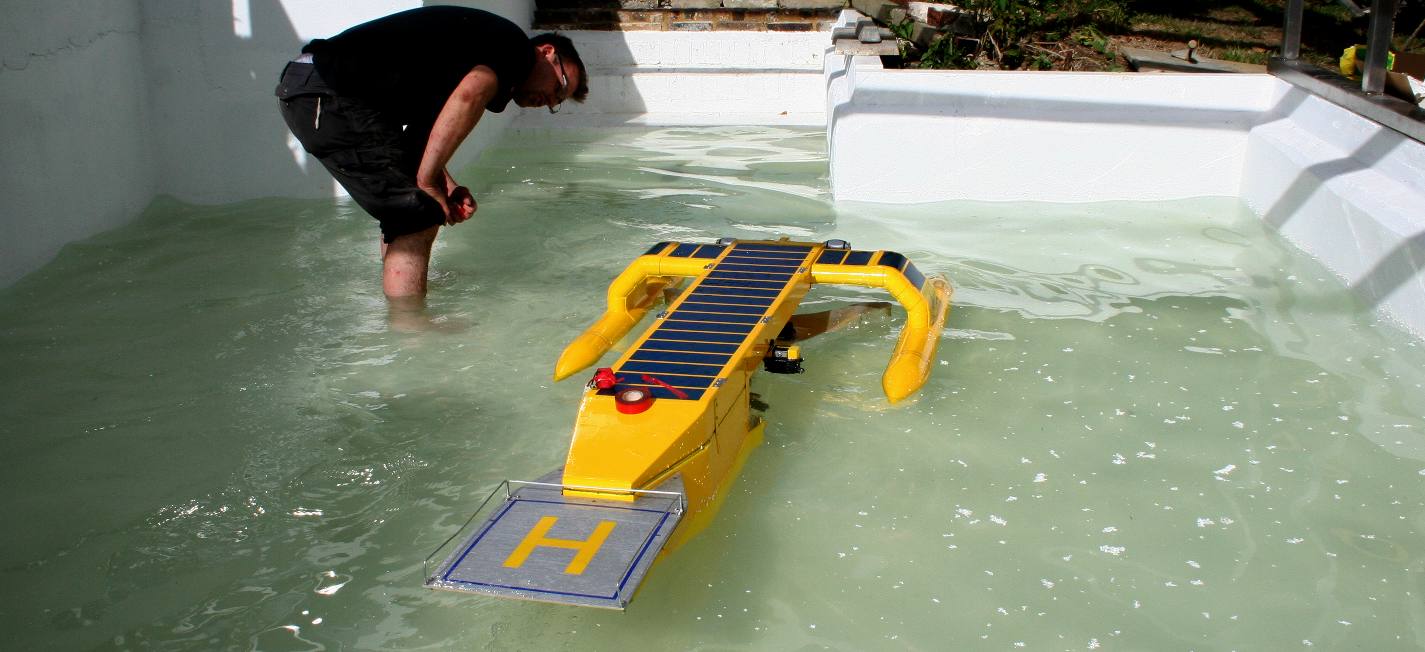
- Chris Close (Project Director) is seen here watching the
SeaVax proof of concept boat filter plastic particles from
water in our
test tank facilities, in this case small polystyrene pieces
were scattered on the surface and recovered using twin
hydrocyclonic chambers to trap the plastic, while clean water
was returned to the tank.
PRESS
RELEASE - AUTUMN 2026
AI Could Turn a Shelved British Ocean‑Cleaning Robot into a Global Plastic‑Harvesting Workhorse
For years, the SeaVax project sat as a symbol of what might have been: a solar‑powered robotic vessel designed to filter plastic from the ocean, capable of separating micro‑ and macro‑plastics while avoiding marine life using optical recognition systems. It was an idea ahead of its time — and, crucially, ahead of its funding. By 2020 the volunteer engineering team had disbanded under mounting mortgage arrears, and the Cleaner Ocean Foundation reluctantly shelved development after repeated EU funding refusals .
But a decade later, something fundamental has changed. Not in the oceans — which continue to choke on plastic — but in the technology landscape. Artificial intelligence, once a speculative footnote in the SeaVax documentation (“we need satellites and computer analytics to speed up our learning curve” ), has matured into a powerful, commercially proven tool capable of transforming the economics of ocean cleanup.
And that shift may finally make SeaVax — or a modern successor — viable.
A robot cleaner that was too early for its own good
SeaVax was conceived as a fully autonomous, solar‑powered ocean filtration machine. Its 13‑metre collector head funnels plastic into a multi‑stage filtration system, including hydrocyclones for microplastic separation . The vessel can store up to 150 cubic metres of treated plastic — roughly 50 tonnes between offloading cycles .
The concept was bold, elegant and — in hindsight — missing one critical ingredient: a way to reliably find plastic.
The team knew this. They wrote openly that locating plastic was
“much the same as going
fishing… you need to know where to let go the nets” . They recognised that satellites could help, but in 2015–2020 the AI tools needed to interpret satellite data simply didn’t exist at practical scale.
Today they do.
AI changes everything — including the economics
Modern AI can detect floating debris in multispectral satellite imagery with high accuracy. It can forecast plastic drift using ocean current models, wind fields and storm data. It can coordinate fleets of autonomous vessels, optimising routes, energy use and offloading schedules.
Applied to SeaVax, that means one thing: efficiency.
The original SeaVax model assumed a 10‑day cycle to locate, harvest and offload plastic. With AI‑guided routing, that cycle drops to around six days — a 67% increase in plastic recovered per vessel per year. That uplift is not speculative; it is consistent with gains seen in other AI‑optimised maritime operations.
For a proposed fleet of 300 vessels — the scale SeaVax’s designers believed necessary to tackle the world’s major gyres — the difference is staggering:
Non‑AI fleet: ~540,000 tonnes/year
AI‑optimised fleet: ~900,000 tonnes/year
An additional 360,000 tonnes of plastic removed annually — equivalent to more than 3% of global ocean plastic input.
This is the kind of number that changes investor sentiment.
The missing commercial hook: Verified Ocean Recovered Plastic
One of the most overlooked aspects of the SeaVax proposal is that ocean‑recovered plastic is not worthless waste — it is a premium commodity.
Brands already pay significantly more for Verified Ocean Recovered Plastic, using it in packaging, textiles and consumer goods to meet sustainability commitments. The SeaVax documentation itself argued that “laws are needed to give a sufficiently high monetary value to genuinely harvested ocean plastic” and that such value could make the system commercially viable rather than philanthropic .
Today, that value exists.
A robotic fleet capable of producing authenticated, traceable ocean‑recovered plastic — with satellite‑verified harvesting locations and AI‑logged collection data — would be uniquely positioned in a growing market. Investors who once balked at the philanthropic framing of SeaVax may now see a blue‑economy asset class with measurable returns.
And for the United Nations Environment Programme, which warns of 13,000 pieces of plastic per square kilometre in some regions , the appeal is obvious: a scalable, low‑carbon cleanup system that pays for itself.
A solution that was politically impossible — until AI made it economically irresistible
The SeaVax team’s biggest barrier was not engineering but politics.
“Without the political will… all the solutions in the world will never see the light of day,” they wrote in 2017 . Funding applications were rejected, governments hesitated, and the project stalled.
AI changes that calculus.
A system that is:
- 50–70% more efficient
- cheaper to operate
- capable of producing premium recycled material
- aligned with UN SDG14
and scalable to global deployment
…is no longer a philanthropic moonshot. It is an environmental infrastructure project with commercial legs.
The tragedy is that SeaVax was simply too early. The opportunity now is that its core design — modular, solar‑powered, autonomous, and already partially prototyped — remains one of the most detailed ocean‑cleanup concepts ever developed.
With AI, it becomes something new: a viable, profitable, globally coordinated ocean‑harvesting fleet.
The question now is not whether SeaVax could work — but who will pick up the baton
The original team is gone. The prototype sits in a
museum in Sussex, a reminder of what innovation looks like when political will fails to meet environmental urgency.
But the oceans have not stopped accumulating plastic. The technology has caught up. The economics have shifted. And the world is finally
preparing for solutions that are both ambitious and practical.
The original SeaVax was designed for a future that didn’t exist yet.
Now we are almost there.
OPEN
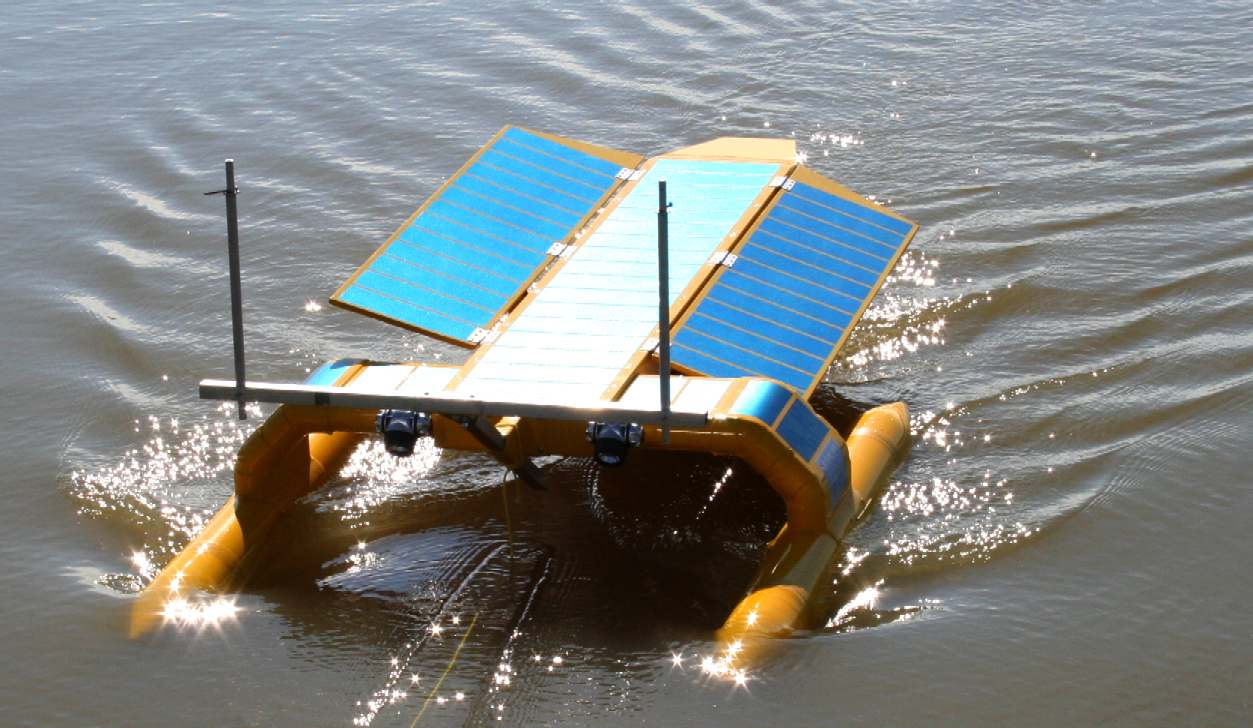
WATER -
SeaVax is seen here during open water floatation
trials. Please note that this is a small (proof of concept)
version of any ocean or river floating dustcart that we hope
will be tested on the south coast of England as the project
progresses. SeaVax is a selective filtration machine that can
be configured to target solid plastics and particles. The
machine could also be used in oil spill emergencies, or as a
selective fishing vessel. The platform could thus be useful in
many ways.
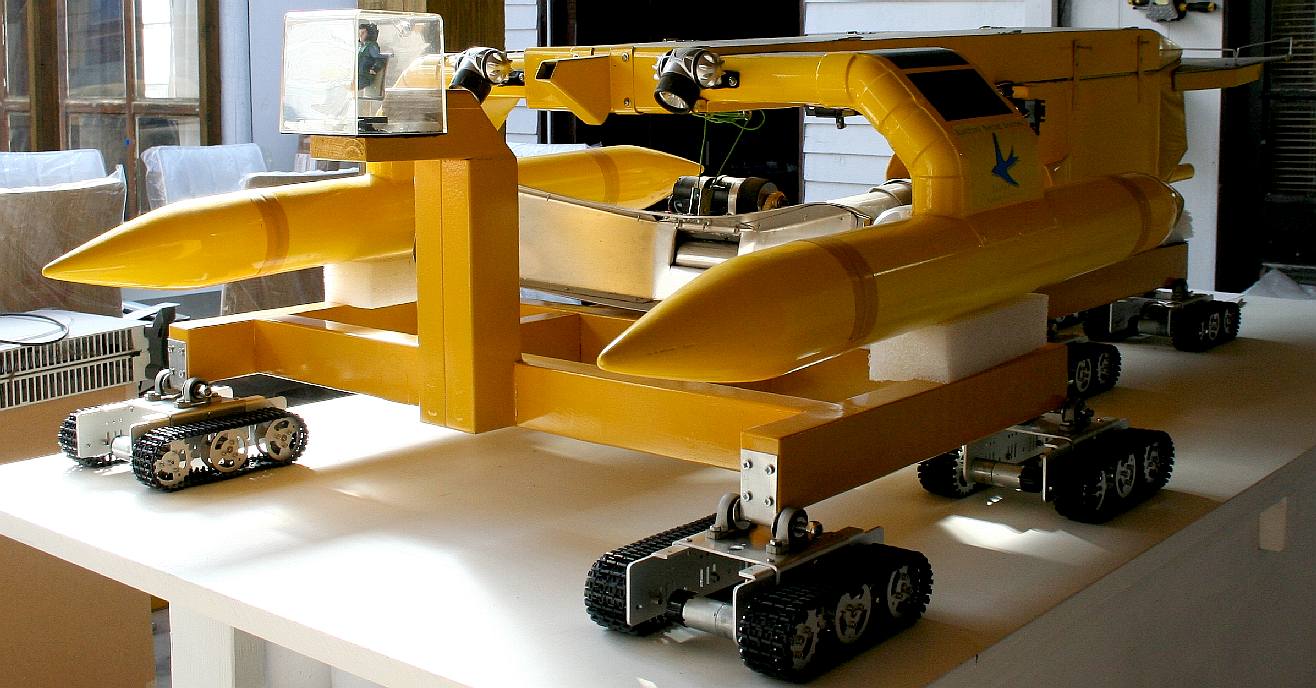
OCEAN
CLEANING RIG - The SeaVax ocean plastic cleaning vessel is
seen here on an AmphiMax beach launcher in 1/20th scale for
testing in our water basin. Copyright ©
photograph 25 June 2018 Cleaner Ocean Foundation. All rights
reserved.
LINKS
& REFERENCE
https://www.
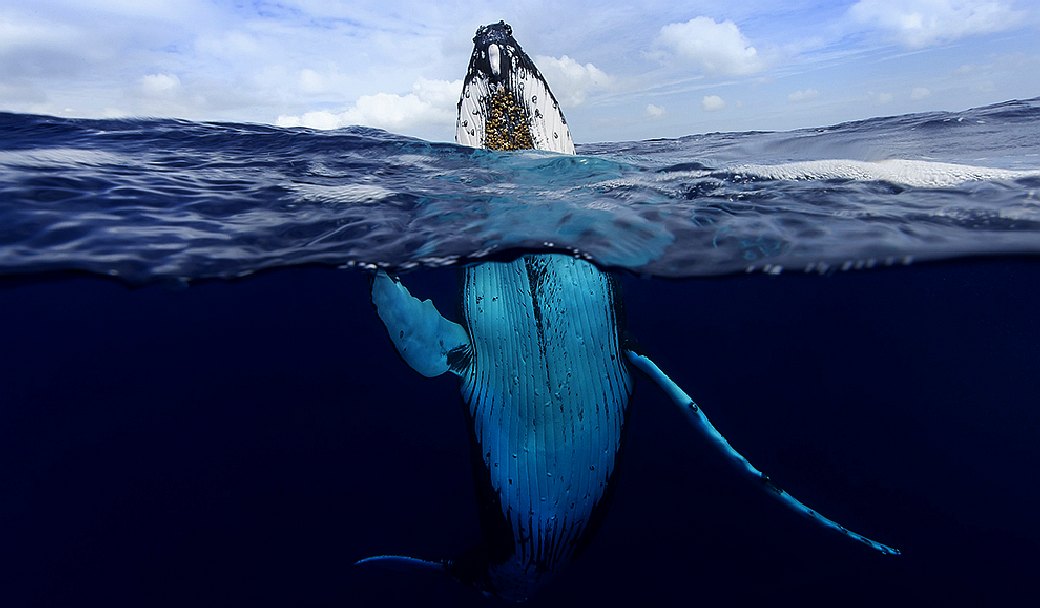
MARINE
LIFE - This humpback whale is one example of a magnificent
animal that is at the mercy of human
activity. Humans are for the most part unaware of the harm their fast-lane
lifestyles are causing. We aim to change that by doing all we
can to promote ocean literacy.
|