|
SEAVAX 2
AI -
HEALTHIER OCEANS & SEAS
Please use our
A-Z to
navigate this site or return HOME
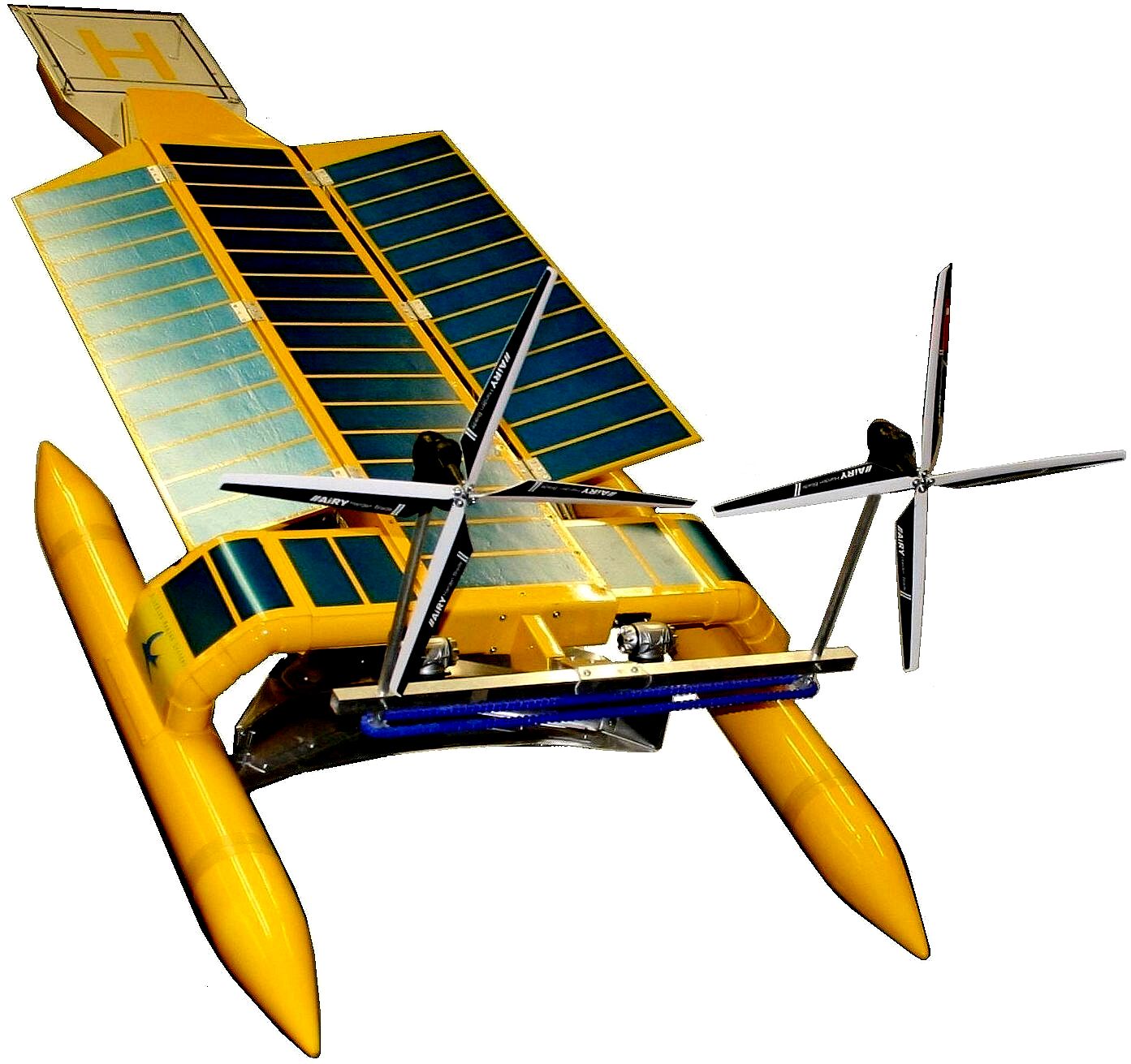
OCEAN
CONDITIONER - This
original SeaVax vessel
was designed to operate in fleets
to target ocean waste before it settles on the ocean floor
where nobody can recover it. There is nothing like it in
existence today, though other ideas for trapping plastic waste
are being developed, such as that of Boyan
Slat and the
Seabin.
SeaVax was to be made more cost effective in operational terms with AmphiMax
versatility that slashes the cost of production and servicing
by using a amphibious portable dock for assembly, launch and servicing.
SeaVax would have been the only ocean going machine capable of
harvesting ghost
fishing nets. Eleven years on from 2015, in 2026 there is
still nothing that can do that.
How SeaVax Complements UN Objectives
1. Fulfilling the Mandate of the UN Global Plastics Treaty
UN Resolution 5/14 explicitly mandates a legally binding instrument that addresses the full life cycle of
plastic, including legacy
marine pollution remediation.
- Closing the Remediation Gap: While treaties aim to regulate production and single-use packaging, they cannot remove the tens of millions of tons of plastic already circulating in aquatic ecosystems.
SeaVax offers a turnkey technological solution to fulfill the treaty's marine cleanup provisions.
- National Action Plans (NAPs): Under the treaty structure, signatory nations must submit NAPs to reduce plastic leakage. Coastal and
river-delta nations can incorporate
SeaVax fleet deployments directly into their UN compliance portfolios.
2. Advancing Multiple UN Sustainable Development Goals (SDGs)
Deploying autonomous recovery fleets aligns directly with several key UN
Sustainable Development
Goals:

3. Protecting International Waters and SIDS
High-seas plastic gyres sit outside national jurisdictions, while Small Island Developing States (SIDS) suffer disproportionate ecological damage despite producing negligible waste.
A UN-coordinated SeaVax fleet could provide a global asset that can operate in international
waters and protect vulnerable island economies that lack the capital to build their own industrial marine recovery fleets.

RIVERVAX
PILOT - This
prototype vessel could have leapt ahead of other designs to become a
reality in 2022 with appropriate levels of support for the
development consortium from the European Commission. Forward
Sea and RiverVax models will not feature wind turbines.
Following a study concluded in 2022, by a Belgian masters
degree student. Thank you L : )
The focus on "Blue Growth"—or the sustainable
Blue Economy—shifts the value proposition of SeaVax 2 AI from a mere cleanup expense to a high-yield, capital-protecting investment.
While policy frameworks and laboratory research are vital, legacy EU initiatives often get trapped in theoretical loops. Until the persistent, legacy accumulation of ocean plastic is physically harvested, the global marine economy faces compounding structural losses.
The Economic & Human Cost of Inaction
Environmental degradation directly erodes financial capital across three critical Blue Economy sectors:
- Biomagnification & Food Security: Microplastics act as hydrophobic chemical sponges, absorbing Persistent Organic Pollutants (POPs) such as polychlorinated biphenyls (PCBs), polycyclic aromatic hydrocarbons (PAHs), and carcinogenic pesticides at concentrations up to one million times higher than surrounding seawater. When fish ingest microplastics, these bioaccumulating toxins translocate into muscle tissue, directly threatening human health and damaging public confidence in seafood safety.
- Declining Fisheries Yields: Ingested plastic leads to gut blockage, reduced reproductive output, and high juvenile mortality across commercial fish stocks. UNEP and economic studies estimate that marine ecosystem services lose $500 billion to $2.5 trillion annually due to plastic pollution—costing the global economy roughly $33,000 per metric ton of uncollected marine plastic.
- Tourism & Coastal Devaluation: Littered coastal zones, toxic algal blooms linked to plastic vectors, and damaged marine habitats directly reduce coastal tourism revenues and drive up municipal shoreline maintenance budgets.
Monetizing SeaVax 2 AI: Value Creation for the Blue Economy
Deploying SeaVax 2 AI as active infrastructure directly mitigates these systemic losses. The economic benefits scale across three primary dimensions:
1. Direct Fishery Yield & Seafood Valuation Recovery
Stock Stabilization: Removing plastics before they break down into micro- and nanoplastics protects spawning grounds and juvenile fish populations, directly restoring natural biomass yields for commercial fleets.
Toxic Load Reduction: Halting the biomagnification pipeline safeguards seafood safety, protecting the premium market value of wild-caught fish and preventing bio-accumulation health crises in
human
populations.
2. Avoided Economic Damage (The Capital Preservation Model)
Every ton of plastic harvested by SeaVax 2 AI prevents exponential downstream financial losses:
3. Circular Raw Material Recovery
By intercepting plastic waste at sea and near river mouth hotspots, SeaVax 2 AI captures valuable feedstocks. Through high-temperature pyrolysis and chemical upcycling partnerships, this harvested waste is converted back into base chemicals, circular polymers, and green fuels—turning a ocean hazard into a circular economy revenue asset.
INVESTMENT LOGIC
The SeaVax2 project is risk-mitigation infrastructure:
Low Consortium Cost vs. High Return: A small, distributed financial contribution from each G20 member yields a deployed fleet that actively protects trillions of dollars in oceanic ecosystem assets.
Measurable ROI: Rather than funding static paper studies, every operational SeaVax 2 AI vessel offers a verifiable metric: tons of plastic removed per dollar spent, directly tied to measurable health, yield, and economic indicators.
WHAT
IS SEAVAX 2.0 AI? - A high-yield
recovery system providing environmental remediation.
THE
UNITED UNEP - Could
SeaVax 2.0 AI, provide a solution, to help the UN
achieve their goals?
CAPEX
AND OPEX - What
level of investment is required?
HEALTHIER
OCEANS & BLUE GROWTH - What
are the health benefits?
INVESTABILITY
- Can
SeaVax 2.0 AI be a commercial success?
WHERE
DOES AI COME IN? - Will
artificial intelligence make a difference?
WORLD
BANK, IMF & UNEP - Are
there any match funding opportunities?
WHAT
IS THE MARKET VALUE OF OCEAN PLASTIC? - Is it worth fishing for marine
plastic?
CERTIFICATION
- How will the ocean plastic be verified for credits?
PATENT
APPLICATION - GB2622325.5
23rd September 2026
PATENT
ABSTRACT
- DESCRIPTION
- CLAIMS
CIRCULAR
(PLASTIC) ECONOMY - FISHING GROUNDS
There
are 5 swirling ocean garbage patches called gyres:
1.
North
Atlantic Gyre
2.
South
Atlantic Gyre
3.
Indian
Ocean Gyre
4.
North
Pacific Gyre
5.
South
Pacific Gyre
The
ocean is a vast expanse of salt water: a shared asset.

TESTING
- Chris Close (Project Director) is seen here watching the
SeaVax proof of concept boat filter plastic particles from
water in our
test tank facilities, in this case small polystyrene pieces
were scattered on the surface and recovered using twin
hydrocyclonic chambers to trap the plastic, while clean water
was returned to the tank.
PRESS
RELEASE - AUTUMN 2026
AI Could Turn a Shelved British Ocean‑Cleaning Robot into a Global Plastic‑Harvesting Workhorse
For years, the SeaVax project sat as a symbol of what might have been: a solar‑powered robotic vessel designed to filter plastic from the ocean, capable of separating micro‑ and macro‑plastics while avoiding marine life using optical recognition systems. It was an idea ahead of its time — and, crucially, ahead of its funding. By 2020 the volunteer engineering team had disbanded under mounting mortgage arrears, and the Cleaner Ocean Foundation reluctantly shelved development after repeated EU funding refusals .
But a decade later, something fundamental has changed. Not in the oceans — which continue to choke on plastic — but in the technology landscape. Artificial intelligence, once a speculative footnote in the SeaVax documentation (“we need satellites and computer analytics to speed up our learning curve” ), has matured into a powerful, commercially proven tool capable of transforming the economics of ocean cleanup.
And that shift may finally make SeaVax — or a modern successor — viable.
A robot cleaner that was too early for its own good
SeaVax was conceived as a fully autonomous, solar‑powered ocean filtration machine. Its 13‑metre collector head funnels plastic into a multi‑stage filtration system, including hydrocyclones for microplastic separation . The vessel can store up to 150 cubic metres of treated plastic — roughly 50 tonnes between offloading cycles .
The concept was bold, elegant and — in hindsight — missing one critical ingredient: a way to reliably find plastic.
The team knew this. They wrote openly that locating plastic was
“much the same as going
fishing… you need to know where to let go the nets” . They recognised that satellites could help, but in 2015–2020 the AI tools needed to interpret satellite data simply didn’t exist at practical scale.
Today they do.
AI changes everything — including the economics
Modern AI can detect floating debris in multispectral satellite imagery with high accuracy. It can forecast plastic drift using ocean current models, wind fields and storm data. It can coordinate fleets of autonomous vessels, optimising routes, energy use and offloading schedules.
Applied to SeaVax, that means one thing: efficiency.
The original SeaVax model assumed a 10‑day cycle to locate, harvest and offload plastic. With AI‑guided routing, that cycle drops to around six days — a 67% increase in plastic recovered per vessel per year. That uplift is not speculative; it is consistent with gains seen in other AI‑optimised maritime operations.
For a proposed fleet of 300 vessels — the scale SeaVax’s designers believed necessary to tackle the world’s major gyres — the difference is staggering:
Non‑AI fleet: ~540,000 tonnes/year
AI‑optimised fleet: ~900,000 tonnes/year
An additional 360,000 tonnes of plastic removed annually — equivalent to more than 3% of global ocean plastic input.
This is the kind of number that changes investor sentiment.
The missing commercial hook: Verified Ocean Recovered Plastic
One of the most overlooked aspects of the SeaVax proposal is that ocean‑recovered plastic is not worthless waste — it is a premium commodity.
Brands already pay significantly more for Verified Ocean Recovered Plastic, using it in packaging, textiles and consumer goods to meet sustainability commitments. The SeaVax documentation itself argued that “laws are needed to give a sufficiently high monetary value to genuinely harvested ocean plastic” and that such value could make the system commercially viable rather than philanthropic .
Today, that value exists.
A robotic fleet capable of producing authenticated, traceable ocean‑recovered plastic — with satellite‑verified harvesting locations and AI‑logged collection data — would be uniquely positioned in a growing market. Investors who once balked at the philanthropic framing of SeaVax may now see a blue‑economy asset class with measurable returns.
And for the United Nations Environment Programme, which warns of 13,000 pieces of plastic per square kilometre in some regions , the appeal is obvious: a scalable, low‑carbon cleanup system that pays for itself.
A solution that was politically impossible — until AI made it economically irresistible
The SeaVax team’s biggest barrier was not engineering but politics.
“Without the political will… all the solutions in the world will never see the light of day,” they wrote in 2017 . Funding applications were rejected, governments hesitated, and the project stalled.
AI changes that calculus.
A system that is:
- 50–70% more efficient
- cheaper to operate
- capable of producing premium recycled material
- aligned with UN SDG14
and scalable to global deployment
…is no longer a philanthropic moonshot. It is an environmental infrastructure project with commercial legs.
The tragedy is that SeaVax was simply too early. The opportunity now is that its core design — modular, solar‑powered, autonomous, and already partially prototyped — remains one of the most detailed ocean‑cleanup concepts ever developed.
With AI, it becomes something new: a viable, profitable, globally coordinated ocean‑harvesting fleet.
The question now is not whether SeaVax could work — but who will pick up the baton
The original team is gone. The prototype sits in a
museum in Sussex, a reminder of what innovation looks like when political will fails to meet environmental urgency.
But the oceans have not stopped accumulating plastic. The technology has caught up. The economics have shifted. And the world is finally
preparing for solutions that are both ambitious and practical.
The original SeaVax was designed for a future that didn’t exist yet.
Now we are almost there.
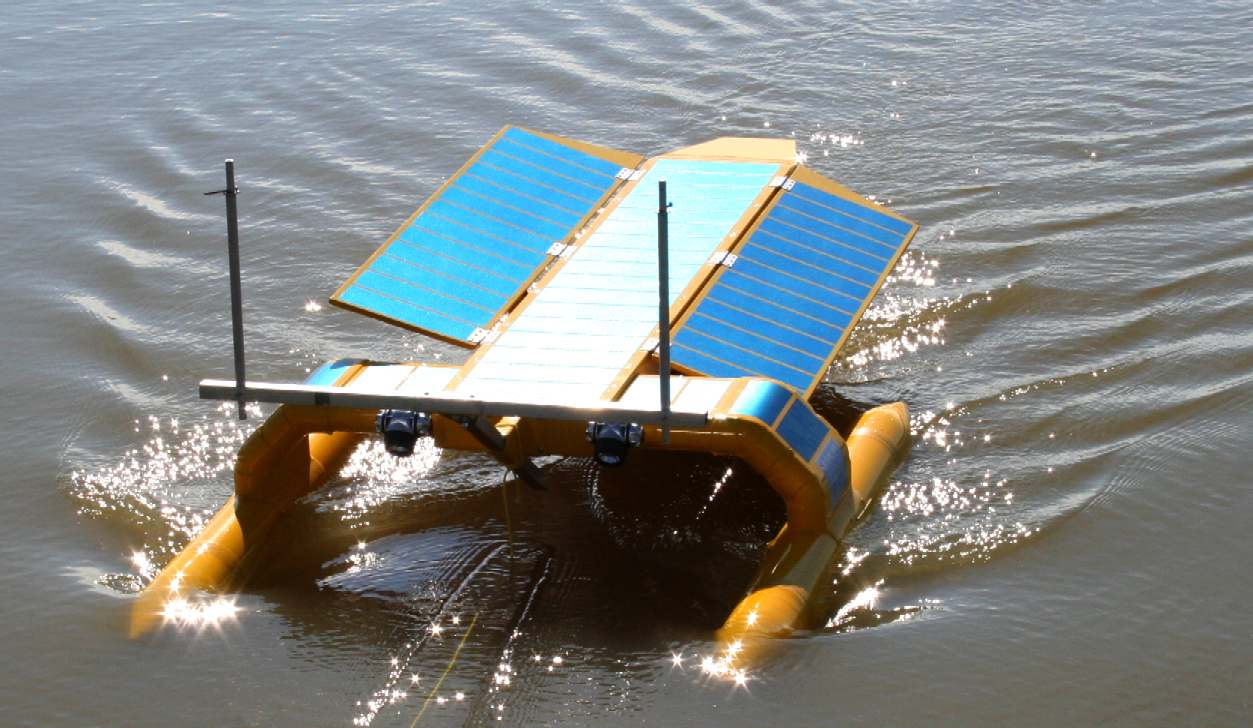
OPEN
WATER -
SeaVax is seen here during open water floatation
trials. Please note that this is a small (proof of concept)
version of any ocean or river floating dustcart that we hope
will be tested on the south coast of England as the project
progresses. SeaVax is a selective filtration machine that can
be configured to target solid plastics and particles. The
machine could also be used in oil spill emergencies, or as a
selective fishing vessel. The platform could thus be useful in
many ways.
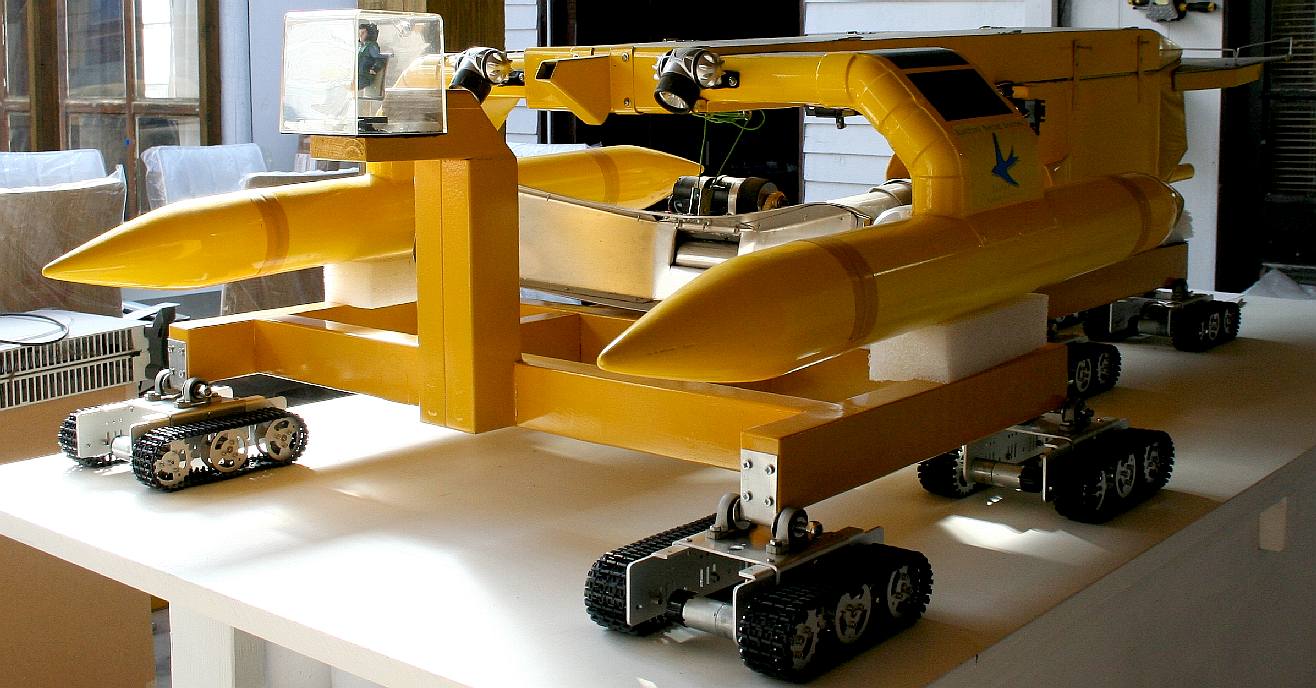
OCEAN
CLEANING RIG - The SeaVax ocean plastic cleaning vessel is
seen here on an AmphiMax beach launcher in 1/20th scale for
testing in our water basin. Copyright ©
photograph 25 June 2018 Cleaner Ocean Foundation. All rights
reserved.
LINKS
& REFERENCE
https://www.
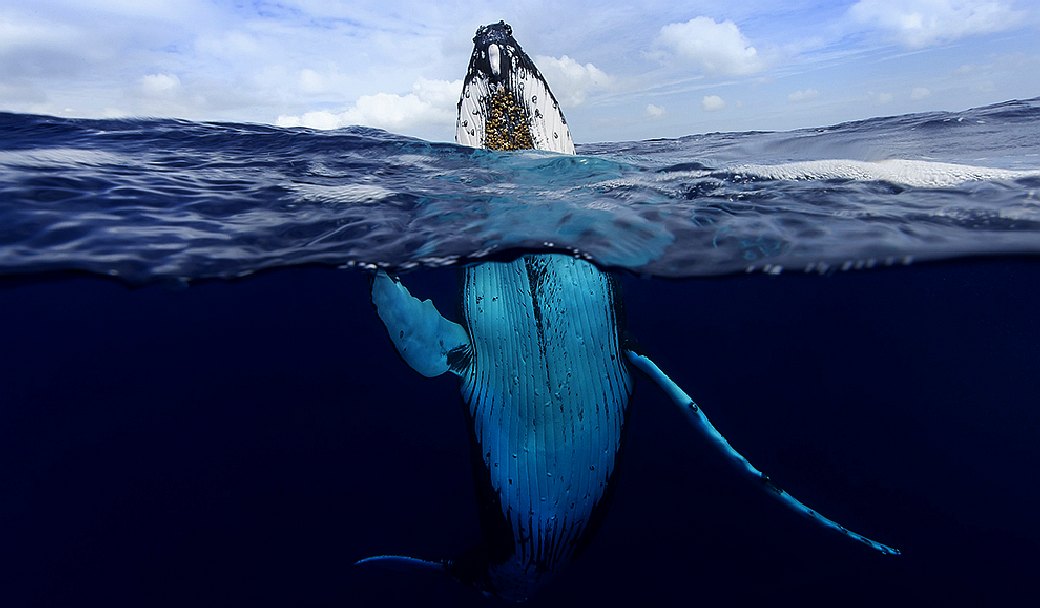
MARINE
LIFE - This humpback whale is one example of a magnificent
animal that is at the mercy of human
activity. Humans are for the most part unaware of the harm their fast-lane
lifestyles are causing. We aim to change that by doing all we
can to promote ocean literacy.
|